What does it take to build a globally competitive, sustainable business ecosystem? This question was at the heart of a week-long study abroad and research visit program that brought together students, academics, companies, and regional development organizations in Vaasa, Finland. While the week was filled with inspiring company visits and unforgettable experiences, it also offered something deeper: a living example of how innovation ecosystems are built and sustained through collaboration, openness, and a shared vision for the future.
As I reflect on the program, I am grateful to the many partners who generously shared their time, knowledge, and experiences. At the same time, I hope these reflections offer broader insights for educators, business leaders, students, and policymakers interested in innovation, sustainability, and international business.
Lesson 1: Innovation Thrives When the Triple Helix Works in Practice
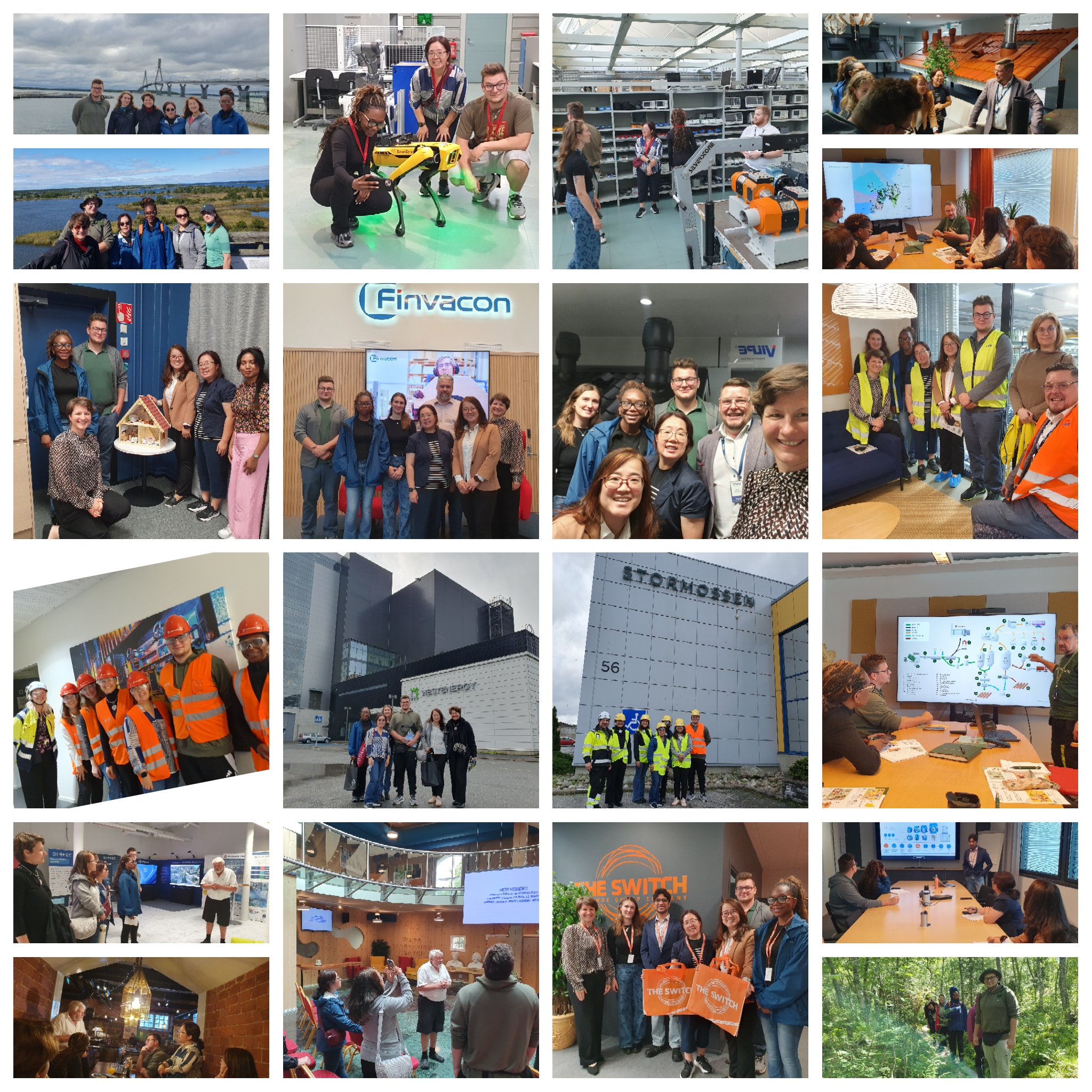
Our journey began with visits to EnergyLab and The Technobothnia Lab, kindly organized by Kim Ketola, Technobothnia Coordinator, David Thomas, expert in alternative fuels, and several other colleagues. Here, we explored facilities dedicated to engine testing for alternative fuels, electricity systems, robotics, construction technologies, and advanced industrial applications.
Beyond the impressive infrastructure, the real learning came from observing how universities, businesses, and public institutions collaborate closely to address industry needs. What many innovation scholars describe as the Triple Helix model was not merely a theoretical framework here, but an everyday reality.
The highlight for many participants was seeing robotics in action, including testing a robotic “dog” and discussing its practical industrial applications. Yet the most valuable insight was arguably broader: successful ecosystems create environments where education, research, and industry continuously learn from each other. Skills development becomes proactive rather than reactive, ensuring that talent and technology evolve together.
Lesson 2: International Growth Often Follows Customers and Technologies
Day two focused on firms operating at the forefront of the global energy transition.
Our first stop was The Switch (BEMAC Group), an agile supplier of customized electric machines and power electronics serving system integrators and OEMs across international markets. Chandan Pandey, smart energy expert, together with Eelis Rousu, senior manager, Marine Concepts at The Switch, provided an outstanding overview of the company’s business model, growth journey, and global operations.
One particularly valuable lesson for visitors was understanding that firms do not always internationalize by simply targeting new countries. Often, they internationalize by following their customers across markets and by leveraging technologies that define where value is created globally.
The factory tour further illustrated another important reality of modern manufacturing. While automation is transforming production, highly specialized B2B products still require extensive customization and close collaboration with customers. In complex green-energy industries, success often depends on the ability to balance efficiency with flexibility.
Innovation may be scalable, but customer solutions are often deeply specific.
Lesson 3: Social Impact and Global Competitiveness Can Reinforce Each Other
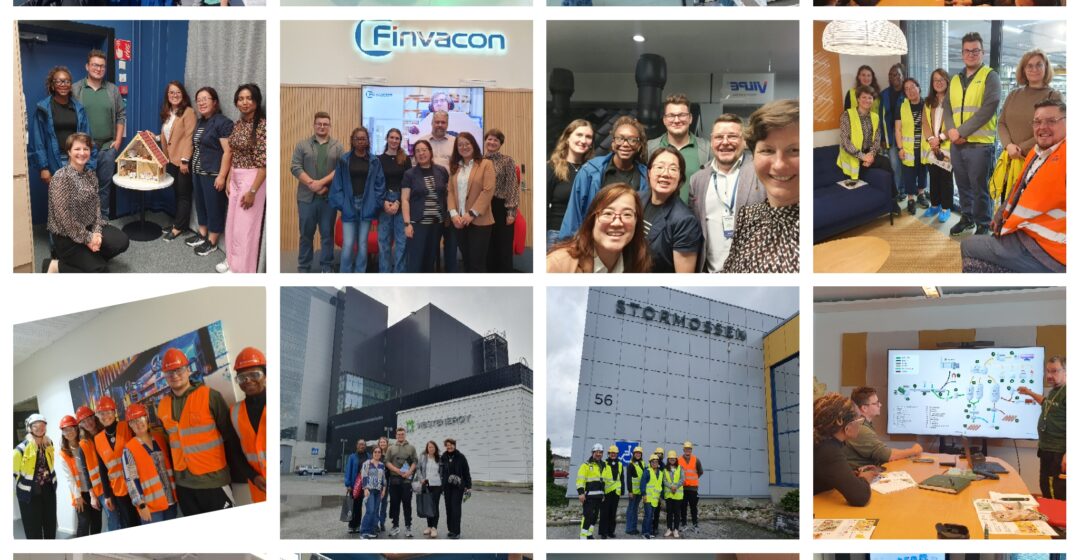
Our next visit took us to Finvacon, a company that challenges traditional assumptions about the relationship between profitability and social impact.
Finvacon is a leading manufacturer of transformer and electric motor components serving major international customers. Yet what makes the company truly remarkable is that nearly half of its employees come from special groups, including people with disabilities, refugees, and recent migrants.
Mathias Norrback, Chief Operating Officer, and Sadaka Tamanna – Marketing Specialist at Finvacon Ltd., shared the fascinating story of how Finvacon evolved from a small workshop for people with disabilities producing dollhouses into a globally competitive technology company. Their story demonstrated that inclusion is not merely a corporate responsibility initiative. It can become a strategic capability that strengthens organizational culture, employee commitment, and long-term competitiveness.
Their philosophy of making social impact a “new normal” offers an inspiring example for organizations worldwide. I am particularly excited that a teaching case on this extraordinary company will soon be available as an open-access resource for teaching international business and strategy.
Lesson 4: Strong Values Can Become a Source of Competitive Advantage
The day concluded with a visit to VILPE, winner of Finland’s National Enterprise Award and recently recognized as one of the country’s best employers.
Katarina Hellén, the Head of Research, and Harri Heiskanen, the Head of Production at VILPE, welcomed us warmly and shared the company’s remarkable growth story. As a family-owned business with deep roots in Finnish society, VILPE demonstrated how long-term thinking and strong values can become genuine sources of competitive advantage.
Beyond discussing international growth, our hosts highlighted the role businesses can play in supporting national resilience and critical infrastructure. They also reflected on how Finnish history has shaped business culture, particularly the emphasis on trust, responsibility, and long-term commitment.
Their story served as a reminder that sustainable success is rarely created by short-term optimization. It is built through consistently earning the trust of customers, employees, and society. VILPE’s story has been also captured in a teaching case and will be available for your use in the coming months – so keep following the news.
Lesson 5: Circular Economy Begins with Seeing Opportunity Where Others See Waste
The third day challenged us to rethink one of society’s most overlooked resources: waste.
As Rasmus Hautala, Circular Economy Manager at Stormossen, memorably put it:
“If you have 20 kilos of trash, you have a problem. If you have 200,000 tons of trash, you have a business.”
That mindset shift framed our visit to Westenergy, where municipalities and businesses collaborate to transform regional waste streams into heating, energy, construction materials, and recycled metals.
Sanna Hautamaa, Communication Officer at Westenergy, provided an outstanding overview of the facility and guided us through the plant. Her comment that “we are transforming energy here from one form to another” fundamentally reframed how many participants viewed waste management. Rather than disposing of unwanted materials, the organization creates value by recovering resources and generating new forms of energy.
Perhaps the most important lesson was that circular economy is not a single company activity. It is an ecosystem activity requiring coordination among municipalities, businesses, citizens, and technology providers.
Lesson 6: Sustainability Creates Multiple Business Models, Not Just One
The visit to Stormossen took these ideas even further.
Stormossen has built an impressive portfolio of circular economy activities, including biogas production, a reused goods marketplace, composting operations, recycling services, and various resource recovery initiatives. Notably, biogas produced through these activities helps power local public transportation.
Through discussions with Rasmus Hautala, participants discovered how seemingly low-value materials can become the foundation for entirely new businesses. Equally impressive was learning how the organization uses digital tools and data-driven decision-making to continuously improve operational and strategic performance.
The visit challenged a common misconception: sustainability is not a cost center. When approached creatively, it can become a platform for continuous innovation, new revenue streams, and long-term value creation.
Lesson 7: Great Ecosystems Are Built by People Who Choose Action Over Talk
Later that day, we shifted our attention from circular economy to entrepreneurship and ecosystem development through visits to Wasa Innovation Center and Bock’s Corner Brewery.
We had the privilege of learning from entrepreneur and ecosystem builder Sture Udd, whose impact on regional development is difficult to overstate.
Among many valuable insights, two stood out:
- Be open to international markets and constantly learn from global experiences.
- Focus on doing rather than talking. Real impact comes from action, experimentation, and implementation.
Sture also encouraged us to look beyond appearances and seek evidence before drawing conclusions. Through numerous examples of regional development initiatives and company success stories, he illustrated how bold ideas become reality when people are willing to collaborate and execute.
One particularly fascinating example involved efforts to bring one of the world’s most sustainable vessels to Vaasa as a living innovation platform and operating ferry. Stories such as these help explain why the Vaasa region and its firms have become one of Finland’s most significant centers of energy (exporting 90% of energy related products in Finland) and leading in national exports (producing approx.. 40% of exports for the entire country).
Lesson 8: Innovation Ecosystems Are Also Built Through Culture and Nature
No exploration of a regional ecosystem would be complete without understanding the environment and culture that shape local mindsets.
We concluded the week by experiencing the UNESCO-listed archipelago surrounding Vaasa through hiking and sailing, picking wild berries, visiting Edvin’s Path, a unique sculpture park created from recycled materials, and participating in cultural activities at the Brage Open-Air Museum.
These experiences reinforced an important realization: sustainability is not viewed here solely as a business challenge. It is deeply embedded in everyday life, community values, and people’s relationship with nature.
Perhaps this cultural foundation is one reason why so many organizations in the region see sustainability not as a burden to manage, but as an opportunity to pursue.
Final Reflections and Huge Thank YOU!
Six days. Dozens of conversations. Countless insights.
What impressed me most was not any single company, technology, or innovation. Rather, it was the remarkable interconnectedness among businesses, universities, municipalities, entrepreneurs, and communities. Again and again, we encountered organizations that were simultaneously creating economic value, advancing sustainability, and contributing to society.
I am deeply grateful to Professor Jing Betty Feng, Farmingdale State College, State University of New York, and Kun Michelle Yang, Professor at Central Michigan University, for trusting me to design this program; to my wonderful colleagues Tiphaine Delecour and Aaron Kiverä for helping bring this ambitious vision to life; to the curious and engaged students from SUNY Farmingdale State College whose enthusiasm made every discussion meaningful; and to Eric C DeSena and Susanne Nylund-Torp, whose attention to countless administrative details made the program possible.
Most importantly, I would like to thank all our partners and hosts. Your openness, generosity, and willingness to share both successes and challenges turned this program into an extraordinary learning experience. You are not only successful organizations. You are ambassadors of a future where innovation, sustainability, and international collaboration go hand in hand. And for everyone who joined us on this journey, that may be the most valuable lesson of all.