Aktion Österbotten is one of the project partners in the PEAK (Development of the regional energy system in Ostrobothnia) project, in which we are mapping and generating new knowledge about the region’s potential for renewable energy in order to accelerate the development of the regional energy system. Energy issues are important for all of us, not only for large cities and the industry. Since a large share of renewable energy is produced in rural areas, villages and their residents are key players in the energy transition.
Local energy solutions can increase the region’s self-sufficiency and can thus play an important role in preparedness and national security – this was hardly considered a few years ago. When energy is produced and stored sustainably and locally, dependence on external actors decreases, which is strengthening resilience in crisis situations. In addition to local energy production, discussions should also address energy consumption, balancing peak demand, and various forms of energy storage.
Hidden Expertise in Villages and Community Energy
Aktion Österbotten develops rural areas through EU rural funding as a Local Action Group, but it also acts as a regional village association. In the PEAK project, we are engaging villages and their residents in the energy discussion. We are particularly interested in the significant energy expertise and related skills found in Ostrobothnia’s villages – through local businesses and people living there. This expertise is not systematically utilized today and is often not combined with general activities in the villages. More hackathons and idea workshops at village level are needed to solve local energy problems and other challenges!
Energy communities have been discussed actively on European level, and some have been established in Finland as well, mainly in cities. Until we start seeing these implemented in rural areas, we have chosen to talk about community energy in the PEAK project and our events. By this, we mean local solutions based on cooperation, trust, and a shared desire to be part of a more sustainable energy system. Community energy is primarily a social and regional approach, after which technical implementations can be considered.
Smart Energy Village Concept and Participation Methods
In the first collaboration with the University of Vaasa within the Horizon 2020 funded project RIPEET, Aktion Österbotten carried out a small-scale pilot for a Smart Energy Village together with the Esse/Ähtävä village. We wanted to highlight the Energy Village concept again, which was developed at the University of Vaasa more than ten years ago and was ahead of its time when the first projects were implemented. We believe that the concrete model offered by the Energy Village concept can help villages to achieve energy self-sufficiency sustainably. In the RIPEET pilot, we aimed to simplify the process somewhat and explore how digital tools can be used and integrated. The Energy Village toolbox helps villages to calculate the potential energy production, to formulate their vision and plan necessary measures. In its current form, the process requires a facilitator providing strong support. Ideally, the tool could be used more independently at village level.
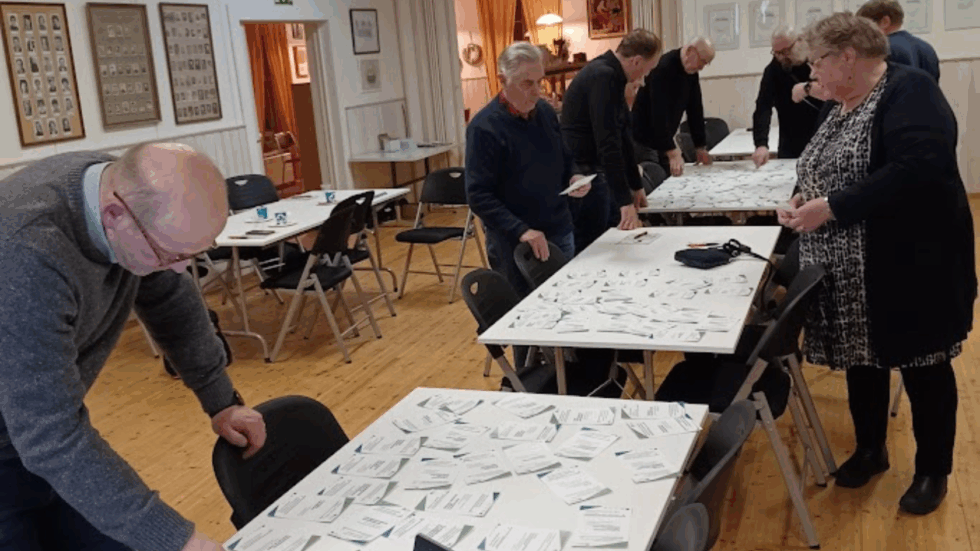
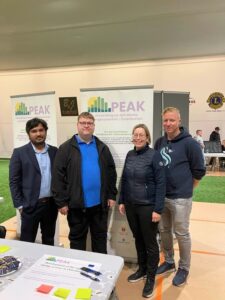
We have continued the work initiated in RIPEET in the PEAK project. Participation and collaboration have been key aspects: We have organized workshops, in which local residents and stakeholders have discussed energy issues. To support this, we have developed discussion cards to inspire conversations and highlight perspectives that might otherwise be overlooked. In our workshop during the Wasa Future Festival, we discussed and validated our results and explored the roles of different actors in the development of a regional sustainable energy system.
Challenges and Opportunities for Rural Energy Systems
Local Action Groups can, if they want to, play a larger role in developing sustainable energy systems in rural areas. This can happen through funding, but also by facilitating collaboration and amplifying local voices.
Our results concerning challenges and opportunities related to the development of the regional energy system confirm insights from previous initiatives. The challenges in developing sustainable energy systems at the village level are mainly related to attitudes, land use, and financing. Green energy is produced in rural areas through solar parks and wind farms – but for whom and what is it produced? For example, data centres are also planned in rural areas, and not everyone likes that the required energy production changes the landscape. Land use raises many questions that are not always simple. What is the planning looking like, are compulsory purchases or similar methods used to access land, and so on? For private, smaller projects, access to funding is often a challenge.
Luckily, there are also many opportunities. Local ownership, as in the case of the PEAK project partner Esse Elektro-Kraft, can support acceptance and provide direct benefits to the local community. As technology develops, new solutions for local energy production and storage are emerging, and e.g. smart grids enable flexible and efficient energy use. In rural areas, cooperation between different actors often works well, and by working together, sustainable energy system solutions can be created.
Smart Energy Village – Discussion Cards as Support
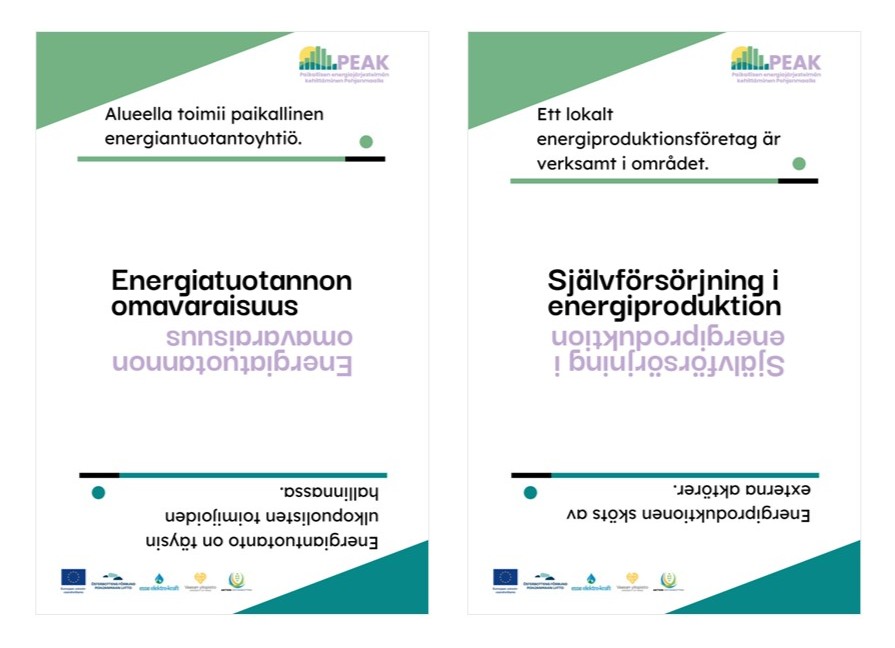
Would you like to discuss sustainable energy and various opportunities in your own living environment, for example during a village evening? The Smart Energy Village discussion cards developed in the PEAK project are a tool for participation accessible for everyone. The cards are available in Finnish and Swedish at Maaseutuverkosto.fi -platform’s knowledge bank for rural developers.
With the help of these cards, residents can discuss about renewable energy, identify local opportunities, and possible challenges for development.
Piritta Syrjälä, Aktion Ostrobothnia
Text originally posted on 13.10.2025 at Akton Ostrobothnia