
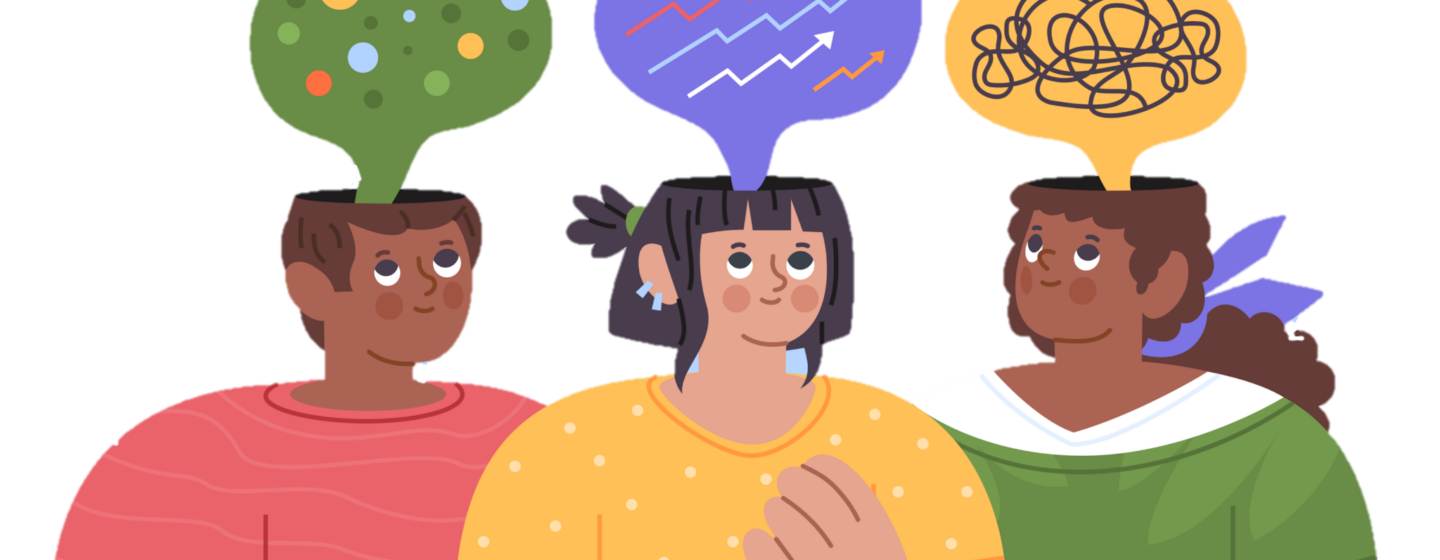
The word neuro refers to the nervous system and how the brain works. When we talk about neurodiversity, we are talking about the natural differences in how human brains function.
Neurodiversity describes the wide range of ways people think, feel, learn, focus, and experience the world. There is no single “normal” brain. Instead, there is natural variation, just like there is variation in personality, height, or temperament.
Neurodivergent traits can include ADHD, autism spectrum traits, dyslexia, Tourette syndrome, and obsessive–compulsive traits. Some people have a formal diagnosis, while others simply recognize certain traits in themselves. Both are part of the same spectrum of human diversity.
Neurodiversity Is Not a Defect
Neurodiversity is a perspective that emphasizes that neurological differences are not disorders that need to be fixed. They are part of normal human variation. Many neurodivergent traits are strongly genetic and have been passed down through generations. These traits did not appear by accident. Historically, qualities such as high alertness, fast reactions, curiosity, risk-taking, and strong focus were essential for survival. Some theorists have described this using ideas like the “hunter–scout” or “sentinel” roles in early human groups. While modern work environments often value calm, consistency, and predictability, human brains evolved to serve many different functions.
Neurodivergent traits are largely inherited and biologically based. They are linked to differences in how certain brain regions develop and communicate with each other, as well as how key neurotransmitter systems function. Areas involved in attention, executive functioning, emotional regulation, sensory processing, and motivation—such as the prefrontal cortex, limbic system, and interconnected neural networks—may be organised or activated differently. These differences are also associated with variation in neurotransmitters such as dopamine, noradrenaline, serotonin, glutamate, and gamma-aminobutyric acid (GABA), which influence focus, alertness, learning, emotional intensity, and recovery. Neurodiversity therefore reflects differences in brain wiring and regulation, not effort, character, or attitude.
Because neurodivergent traits are biological and genetic, they cannot be changed through willpower, discipline, or practice alone. A person cannot simply “train themselves” out of ADHD or autism.For some neurodivergent traits, medication can be helpful. For others, there is no medical treatment. Support such as therapy, coaching, or social support may help individuals cope, but these approaches do not change how the brain is wired.
How Common Is Neurodiversity?
It is estimated that around 15–20% of people have some form of neurodivergent traits. This means that in every workplace, classroom, and community, neurodiversity is already present, whether it is recognized or not.
Neurodivergence exists in many different forms and profiles, and its expression varies widely. People may function very differently depending on their individual traits, life circumstances, and the environments they are in. Some individuals experience significant support needs, while others function independently and may not appear neurodivergent to others. Because of this wide variation, simple distinctions such as “high-functioning” and “low-functioning” are often misleading and do not capture the full picture.
Many neurodivergent people are never formally diagnosed. This may be because their neurodevelopmental traits do not cause significant difficulties earlier in life, because they have developed strong coping strategies, or because they do not seek or have access to assessment. Diagnostic rates are also strongly influenced by systemic factors, such as access to healthcare, awareness among professionals, cultural attitudes, and regional diagnostic practices.
The reported prevalence of neurodevelopmental conditions varies significantly between countries and even between regions within the same country. Differences in diagnostic criteria, resources, and support systems all affect who receives a diagnosis and who does not. For this reason, prevalence figures should be understood as estimates rather than exact numbers, and as a reminder that neurodiversity is more common, and more varied, than diagnostic statistics alone suggest.
Neurodevelopmental diagnoses are often associated with a range of co-occurring conditions, such as clinical depression, anxiety, suicidality, and heightened sensitivity. These difficulties are not inherent to neurodivergence itself, but may develop as a consequence of unrecognised, unsupported, or untreated neurodevelopmental traits. When neurodivergent needs are not identified or adequately supported, prolonged stress, misunderstanding, and repeated experiences of failure or exclusion can significantly increase the risk of secondary mental health difficulties.
Below, you will find an overview of some of the most common diagnoses of neurodivergence and their associated strengths as well as possible needs for support.
Dyslexia (approximately 7%)
Dyslexia is a neurodevelopmental difference that primarily affects reading, writing, and written language processing. It is not related to intelligence, motivation, or effort. Dyslexia reflects differences in how the brain processes written symbols and language, which can make decoding text, spelling, and producing written output more time-consuming and cognitively demanding.
Dyslexia exists on a spectrum. Some individuals experience mild difficulties that become visible mainly under time pressure, while others require ongoing support in text-heavy environments. Many people with dyslexia develop strong compensatory strategies and often remain undiagnosed until higher education or working life.
People with dyslexia often demonstrate:
💎Strong visual and spatial thinking
💎Creativity and innovative problem-solving
💎Ability to grasp big-picture concepts
💎Oral communication and storytelling skills
💎Strategic thinking and insight
💎Empathy and interpersonal sensitivity
Common support needs may include
🛠️Extra time for reading and writing tasks
🛠️Clear, well-structured texts with summaries
🛠️Visual supports (diagrams, charts, videos)
🛠️Assistive technologies (text-to-speech, speech-to-text)
🛠️Alternative ways to demonstrate competence (oral, visual, multimodal)
🛠️Reduced reliance on speeded reading or writing as a measure of competence
ADHD (approximately 11%)
The term ADHD stands for Attention-Deficit / Hyperactivity Disorder. The name is somewhat misleading: ADHD is not a lack of attention, but rather a difficulty in regulating attention, activity level, and impulse control.
From a neurobiological perspective, ADHD is associated with differences in brain chemistry and neural regulation, particularly in systems involving dopamine and noradrenaline. These neurotransmitters play a key role in motivation, reward processing, focus, and executive functioning. In ADHD, these systems tend to be under-activated, which means that tasks that are repetitive, abstract, or low in immediate reward can feel disproportionately difficult to start or sustain, even when the person is capable and interested. This also explains why people with ADHD often struggle to get started despite knowing what to do, work well under time pressure or with clear deadlines, show bursts of intense focus (hyperfocus) when a task is stimulating or meaningful, and seek novelty, movement, or variation to maintain engagement.
Historically, a distinction was made between ADD (Attention Deficit Disorder) and ADHD, where ADD referred to individuals without visible hyperactivity. This distinction is no longer used in current diagnostic systems. Today, ADHD is understood as a spectrum that includes different presentations predominantly inattentive, predominantly hyperactive-impulsive, and combined presentation. The removal of the ADD label reflects improved understanding: the underlying mechanisms are the same, and the challenges are related to regulation, not presence or absence of hyperactivity. Many adults with ADHD, especially those previously labelled as having ADD, experience significant internal restlessness, mental overactivity, or fluctuating attention rather than outward hyperactivity.
People with ADHD often demonstrate:
💎Strong ideation and creativity
💎High energy, enthusiasm, and initiative
💎Speed and efficiency in task execution
💎Adaptability and willingness to try new approaches
💎Intuitive ability to see the big picture
💎Empathy and informal leadership
Helpful support in studies and work
🛠️Clear structure and predictable routines
🛠️Step-by-step instructions instead of large, ambiguous tasks
🛠️Intermediate deadlines and regular rhythms
🛠️Tools that support time management and prioritisation
🛠️Opportunities for movement, action, and variation
🛠️Tasks that involve ideation, experimentation, or problem-solving
Autism spectrum (approximately 7%)
Autism is described as a spectrum because it includes a very wide range of profiles, abilities, and support needs. Individuals on the autism spectrum can function very differently in daily life, studies, and work. Some may require substantial support, while others live independently and perform at a very high academic or professional level.
Earlier diagnostic categories such as Asperger syndrome are no longer used as separate diagnoses. Today, these profiles are included under the broader autism spectrum, not because the individuals are the same, but because the underlying neurobiological mechanisms and support approaches are largely shared. The spectrum model recognises diversity rather than ranking people by “severity.”
Terms like high-functioning and low-functioning are sometimes used informally, but they can be misleading. A person may function highly in one area (e.g. academic reasoning or technical expertise) while needing significant support in another (e.g. social interaction, sensory regulation, or coping with change). Functioning is context-dependent, not a fixed personal trait.
Autistic individuals often demonstrate:
💎Strong attention to detail and accuracy
💎Systematic and logical thinking
💎Ability to handle complex information
💎Deep focus and specialised expertise
💎Reliability, and consistency
Support needs often relate:
🛠️Clear, explicit communication (no reliance on “reading between the lines”)
🛠️Predictable structures and schedules
🛠️Advance information about changes
🛠️Quiet or low-stimulation working environments
🛠️Tasks that require precision, analysis, or deep focus
🛠️Roles that allow expertise to develop over time
Tourette syndrome (approximately 1%)
Tourette syndrome is a neurodevelopmental condition characterised by involuntary motor and/or vocal tics. These tics can vary greatly in form, frequency, and intensity over time, and they are not under the person’s conscious control. Many individuals with Tourette syndrome experience periods when symptoms are mild or barely noticeable, and others when they are more pronounced.
Tourette syndrome exists on a spectrum. Some individuals experience only occasional, mild tics, while others may have more persistent or visible symptoms that require support. Cognitive ability is not affected by Tourette syndrome, and many individuals function at a high academic and professional level.
Tourette syndrome often co-occurs with other neurodivergent profiles, such as ADHD or obsessive-compulsive traits, which can influence how challenges and strengths appear in learning and working environments.
People with Tourette syndrome often demonstrate:
💎Persistence and resilience
💎Humour and social insight
💎Empathy and emotional awareness
💎Strong situational awareness
Support needs may include:
🛠️Understanding of involuntary motor or vocal tics
🛠️Flexibility in social and physical environments
🛠️Reduced attention to behaviours that are outside the person’s control
🛠️A psychologically safe environment
🛠️Flexible working or study arrangements
Obsessive-compulsive disorder (OCD) (approximately 1–2%)
Obsessive–Compulsive Disorder (OCD) is a neuropsychiatric condition characterised by intrusive, unwanted thoughts (obsessions) and repetitive behaviours or mental actions (compulsions) that are performed to reduce anxiety or prevent a feared outcome. These behaviours are not habits or preferences; they are driven by intense internal discomfort and are often recognised by the person as excessive or irrational.
OCD exists on a spectrum. Some individuals experience mild symptoms that are mostly internal and invisible, while others may experience more time-consuming or distressing patterns that significantly affect daily functioning. Cognitive ability is not impaired by OCD, and many individuals perform at a high academic or professional level.
In learning and work contexts, OCD is often misunderstood as perfectionism or over-conscientiousness. While attention to detail can be a strength, OCD-related behaviours are driven by anxiety rather than preference and can become exhausting without appropriate support.
People with OCD often demonstrate:
💎High accuracy and thoroughness
💎Strong organisational skills & routines
💎Commitment to quality and responsibility
💎Persistence and conscientiousness
💎Motivation to perform well*
Helpful support in studies and work
🛠️Clear task boundaries and priorities
🛠️Realistic expectations around “good enough”
🛠️Structured environments
🛠️Recognition of effort and quality, not only speed
Why the Environment Matters Most
The most important factor for neurodivergent people is not treatment, but the environment.
Traditional support approaches have often focused on trying to make neurodivergent people behave more like neurotypical people. This can include training in social skills, concentration, emotional regulation, or “professional behavior.”
While these approaches may help in specific situations, they often send an unintended message: that neurodivergence is a problem that must be corrected.
Focusing only on deficits reinforces the idea that something is wrong with the person, rather than questioning whether the environment itself is too narrow.
A Modern Approach: Strengths-Based Design
A more modern and sustainable approach to neurodiversity at work focuses on strengths-based job design. This means designing roles, tasks, expectations, and ways of working that allow different kinds of brains to contribute effectively. Instead of forcing everyone into the same mold, organizations can benefit from recognizing and using cognitive diversity.
When work environments allow for flexibility, clarity, and different working styles, neurodivergent people are more likely to thrive, and organizations gain access to creativity, problem-solving, energy, and adaptability. Neurodiversity is not something to manage away. It is something to understand, support, and work with.
See next videos about neurodiversity (in Finnish):