
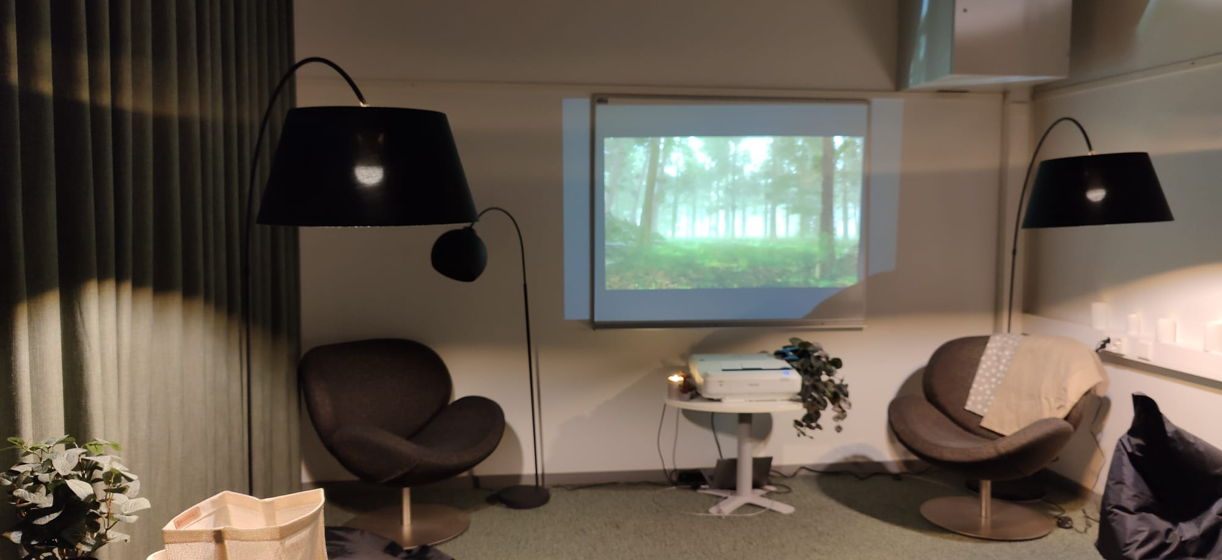
At Fabriikki at the University of Vaasa, students have access to three low-stimulation spaces designed to support wellbeing, focus, and sensory regulation. The spaces are located on the second floor and are open to students during Fabriikki’s opening hours, in accordance with the usage guidelines.
Sensory Room – Tyyni (F221)
Quiet Exam and Work Space – Hilja
Dark Room – Pimiä
Contact persons: Lyndsey Morley and Heini Pensar
Sensory room – Tyyni
Tyyni (Finnish for serenity) is a sensory-informed space designed to support focused work, nervous system regulation, and recovery from cognitive or sensory overload. The room provides two workstations for quiet study, where noise-cancelling headphones are available. Tyyni is located in Fabriikki 2nd floor (F221) and is open according to Fabriikki opening hours.
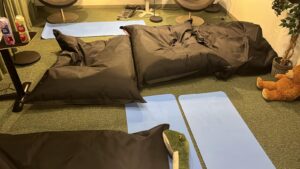
Sensory Design Features
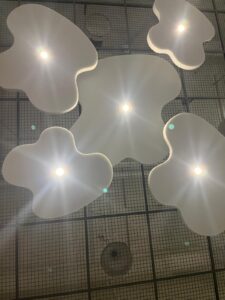
- The space is intentionally free from direct natural
daylight to minimise visual overstimulation - A green wall-to-wall carpet made of allergy-friendly materials supports both acoustic comfort and indoor air quality
- instead, lighting is fully adjustable to accommodate individual sensory preferences
- Acoustic cloud luminaires provide diffused illumination while enhancing sound absorption and reducing reverberation
- The walls are covered with allergy-friendly acoustic textile panels to further optimise the auditory environment
- Indoor plants contribute to a calming biophilic atmosphere
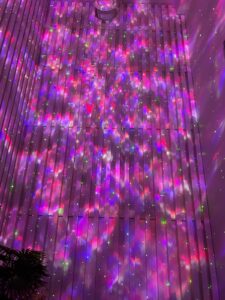
- A projector can display nature-based visual content with optional natural soundscapes to support relaxation and sensory regulation.
Regulation & Recovery Tools
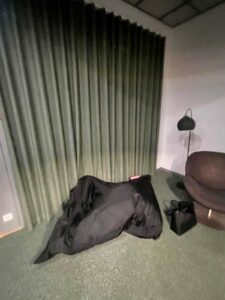
- Adjustable ambient lighting to enable individual sensory modulation
- Nature-based videos and soundscapes to support parasympathetic activation and stress reduction
- A gym ball to allow subtle movement and postural regulation during seated work
- Stress-regulation tools, including stress balls, colouring books, soft toys, blankets, puzzles, and nature-, stress-, and breathing prompt cards to support grounding and emotional regulation
- A mini trampoline, which provides vestibular and proprioceptive input; gentle bouncing is known to increase alertness, activate the sensorimotor system, and support regulation of arousal levels
- Other movement-based tools, such as a back roller and neck pillow, to promote muscle relaxation, body awareness, and sensory integration
Please follow these rules when using the room:
📌Remove shoes and outerwear when entering the room
📌Do not bring food into the room
📌Avoid strong scents
📌Keep noise low
📌Maximum of 6 people at a time
📌No booking is needed; you may enter if there is space
📌Do not remove equipment from the room
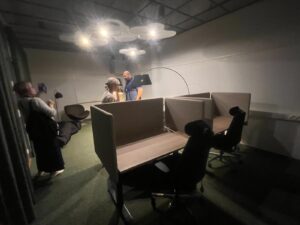
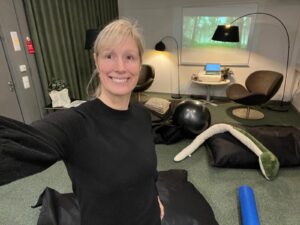
Let us know how you experience your stay at the sensory room. Heini will listen to your ideas!
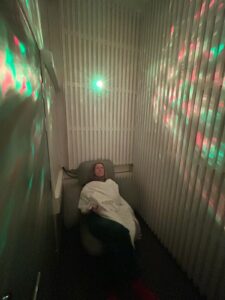
Dark room – Hilja
Hilja (Finnish for silence) is a low-stimulation space designed to support sensory withdrawal, nervous system regulation, and recovery from sensory overload. The room can be made almost silent and completely dark, minimising both auditory and visual input. A weighted blanket is available to provide deep pressure stimulation that may support calming and rest.
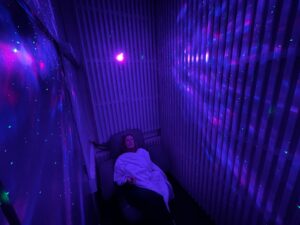
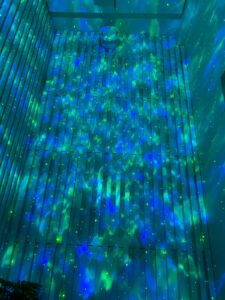
The room is intended for one person at a time to ensure privacy and optimal restorative effect. The room is almost completely soundproof and lightproof. It has a high ceiling, which helps maintain good air quality and a pleasantly cool temperature. There is a comfortable armchair and a weighted blanket available. You can sit quietly in the dark and silence, or keep the lights on and, for example, listen to music. The room may be used when the indicator outside the door (Rauha Room) shows green (available). Please do not enter when the indicator shows that the room is occupied or reserved.
Quiet exam and work space – Rauha
Rauha (Finnish for calm) is primarily used for digital EXAM examinations. When not reserved for exam use, the space functions as a quiet work area for independent study. The room may be used when the indicator outside the door shows green (available).
Please leave the spaces clean and tidy after use.
For more info, see here.