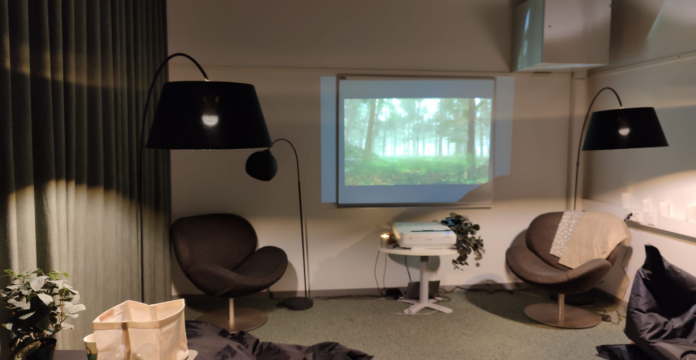

This handbook is based on experiences collected through our ongoing NeuroPRISM study. The data comes from individual and group coaching sessions, as well as events where students shared their experiences of higher education both orally and in writing. We also collected feedback after these events, for example about the wishes of neurodivergent individuals for a more neuro-inclusive university. In addition, experiences were gathered from teachers through training sessions and solution-focused discussions. These experiences have helped us understand what matters most to neurodivergent people in higher education, and the handbook is built on these insights. The work is still ongoing, and the handbook will be updated as new knowledge is gained.
What is Neuroinclusive Higher Education?
Unlike it is often assumed, neurofriendly higher education is not primarily about making “special arrangements.” Nor is it about accommodating all needs, lowering academic standards, or creating separate tracks for a few students. It is about recognising that students learn, process information, regulate attention, and demonstrate competence in different ways, and designing education accordingly. Before tools, platforms, or adjustments, there is something more important to take into consideration:
🌼How students are encountered
🌼How difference is interpreted
🌼How learning environments either support or exhaust
Many students who struggle in higher education do not lack ability or motivation. Instead, they may be overwhelmed by ambiguity, stuck at the starting point, drained by constant self-correction, or unable to demonstrate their competence within the narrow formats that education often rewards. Difficulties often arise from how learning is structured, communicated, and paced, not so much on the content itself.
Most students, neurodivergent or not, benefit from consistent and predictable structures in Moodle or other learning environments. When information is scattered, instructions change from week to week, or expectations remain implicit, students may spend a disproportionate amount of energy trying to interpret the course rather than engaging with the learning itself. If finding essential information becomes too burdensome, students may give up on trying to make sense of the course altogether.
Beyond structure, neurofriendly education is also about how learning is paced, supported, and emotionally framed throughout the course.
For neurodivergent individuals, difficulties often arise from learning processes that demand constant self-regulation, continuous effort to keep up with schedules and assignments, and a state of continual coping without sufficient external support. Getting started, prioritising tasks, maintaining motivation, and recovering from setbacks can be disproportionately demanding. Clear structures help, but they are most effective when combined with guidance, encouragement, and visible progress.
Why is a consistent and repetitive structure important?
A consistent course structure reduces cognitive load by allowing students to focus on learning rather than searching for information or interpreting unclear expectations. This is especially important for new students, during stressful periods such as deadlines and exams, and in complex or content-heavy courses. A predictable structure also supports accessibility and equity, benefiting neurodivergent students, students with learning difficulties, and those studying in a non-native language.
When information is always found in the same place and presented in a familiar format, students can work more independently, make fewer errors, and experience less frustration. Over time, this predictability builds trust in the learning environment and supports a sense of control, safety, and academic confidence.
Recommendations for learning environments
It can be difficult for any student to find essential information about how to complete a course if that information is spread across different places, platforms, or formats from one course to another. For neurodivergent students, this can be especially critical. Some students on the neurodiversity spectrum may have less capacity for sustained effort, and motivation may not be strong enough to get past initial barriers. When one card in the house of cards falls, the entire structure can collapse. As a result, a course may be left unfinished or not started at all.
For this reason, it is essential to make course completion as simple, clear, and accessible as possible:

🌐 Consistent and repetitive structure
🌐 Important tasks and deadlines collected in one recurring, clearly visible location
🌐 Assignment submission boxes located in the same place
🌐 Course Zoom link and teachers’ contact information available in the same location
🌐 Use consistent icons, labels, and visual patterns
Keep similar content in the same place in every course, eg.:
🖥️Weekly structure or learning pathway: what to do each week and in what order
🖥️ Assessment criteria and grading information
🖥️ Course schedule or calendar
🖥️Assignment submission instructions, e.g. file formats, late submission policy
🖥️ Frequently asked questions (FAQ)
🖥️ Recordings and learning materials
🖥️ Absence and flexibility policies
🖥️Information on how and when to contact the teacher and expected response time
Taking the student perspective
Planning how to complete a course can be difficult for some students. Students often take several courses at the same time, but individual teachers rarely have visibility into what is happening in other courses. This can create uncertainty about upcoming tasks and workload across a school term.
Students are people with lives beyond their studies. For this reason, key dates, deadlines, and major assignments should be made visible at the very beginning of the term. This helps students understand what the coming months will look like and allows them to build a realistic shared schedule and to-do list.
Someone (such as a degree programme coordinator or lead teacher) should take responsibility for reviewing the overall workload and ensuring that there are not multiple overlapping group assignments or peak demands at the same time.

✔️Courses offer multiple ways to complete assignments or demonstrate learning
✔️Not all deadlines just at the end of the course
✔️Ideally, students could choose a weekly track or a time-independent track
✔️Group work is not a default for every course
✔️Assignment instructions are available well in advance, preferably in the beginning of the term
✔️Deadlines are predictable and follow a regular rhythm
✔️Learning materials include captions or text alternatives, clear language, and readable formats
✔️Courses use a checklist or progress tracker that allows students to mark completed tasks
✔️Clear outlining of what to do each week and how much time each task is expected to take
Support getting started and maintaining momentum
Many students get stuck at the starting point, not because tasks are too hard, but because they feel too big or unclear.
📋Break larger tasks into smaller, concrete steps
📋Use getting started checklists (step-by-step guide)
📋Provide early, low-effort tasks that help students get started
📋Build in small wins and reward elements of completed tasks
📋Celebrate effort, not only correctness

What neurofriendly encounter is
Neurodivergent individuals generally do not want special arrangements to be visible, noticeable, or in any way excluding them. Neurodevelopmental diagnoses are often kept confidential between the student and the teacher, and not all students choose to disclose them, even if disclosure could provide exam accommodations such as extra time, a quieter room to support concentration, or other adjustments.
It is also important for teachers and staff to recognize that many students may still be undiagnosed at the higher education stage. For some, neurodevelopmental differences may not have caused significant difficulties earlier, but challenges can begin to emerge at this point as academic demands change. Workload can also increase, especially when students move away from home and need to manage many new responsibilities at the same time.
 In the wishes and experiences of neurodivergent individuals (that we have collected), the power of human interaction seems to be emphasized: how they are met and encountered, listened to, and taken seriously. Neuro-inclusivity, therefore, lies even more in everyday interactions than in structural adjustments alone. Higher education staff can make their institution much more neuro-inclusive almost immediately by paying attention to everyday encounters and interactions.
A neurofriendly encounter means:
✅ Taking the student seriously when they describe difficulties
✅ Showing curiosity instead of suspicion or dismissal
✅ Interpreting challenges as potential mismatches between the learner and the environment, not as lack of ability or motivation
✅ Focusing first on understanding the root cause of the difficulty
This does not require diagnosing, labelling, or solving everything. Often, what matters most is that someone pauses, listens, and helps make the situation understandable. Small acts of recognition and reassurance, explaining why something is difficult, often have a greater impact than extensive adjustments.
What neurofriendly encounter is not
Neurofriendly teaching does not mean:
❌Lowering academic standards
❌Creating unlimited exceptions or personalised rules for each student
❌Removing all deadlines, structure, or responsibility
❌Ignoring the student when they tell about their condition
❌Assuming the student uses neurodiversity as an excuse
❌The environment adapts endlessly, but expectations become unclear
❌One student’s adjustments undermine predictability or fairness for others
❌Support replaces skill development rather than enabling it
A practical rule of thumb: Support should reduce barriers, not replace the student’s responsibility to learn. The role of the teacher is not to carry the student, but to remove unnecessary friction that prevents learning from starting or continuing. Neurofriendly encounter aims to restore agency, not remove it.
The core of the encounter
At its heart, a neurofriendly encounter is more about attitude:
🤝Moving from blame to curiosity
🤝From “Why can’t you?” to “What is getting in the way?”
🤝From forcing conformity to enabling participation
Equality does not mean sameness
Neurofriendly encounter recognises that:
🌱Students have different starting points
🌱The same structure can be exhausting for one and supportive for another
🌱Treating everyone identically can itself be unequal
At the same time, fairness requires clear boundaries:
📋Transparent criteria
📋Predictable structures
📋Shared rules that apply to everyone, with flexibility used deliberately (not invisibly or arbitrarily)
Referring to support
A teacher or supervisor should be aware of the services available in the institution and by its partners, so she/he can refer students to the right source of support.
In Finland, Erilaisten oppijoiden liitto / Diverse Learners -association can be helpful for students who struggle with reading/writing or focusing.
Videos from Datero ry and Erilaisten oppijoiden liitto / Diverse learners’ Association (in Finnish)
See Datero’s smart tools and Erilaisten oppijoiden liitto
See next: Neuroystävällisyyden iltapäivä – taltio (in Finnish)
Read more about neurodiversity here