
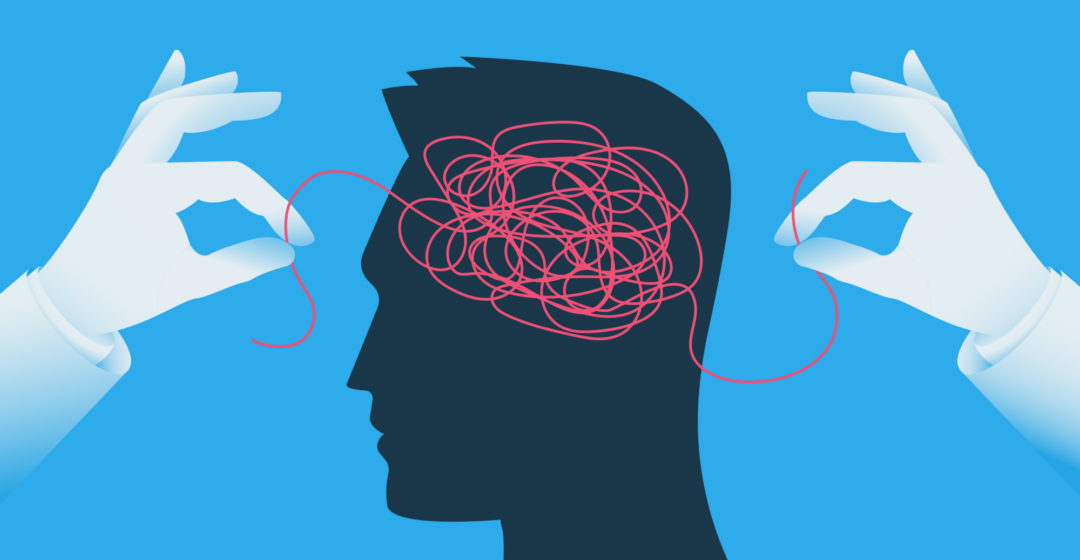
This blog article draws on an ongoing Nordic survey on ADHD and working life. Nearly 300 diagnosed adults aged 20 to 67 have responded so far, from Denmark, Norway, Sweden and Finland. The survey remains open, and the findings discussed here reflect recurring patterns across the current dataset.
As we examine ADHD in working life, one recurring issue is difficult to ignore. For many people with ADHD, work is simply exhausting. This connection may not always visible at first. Careers may look active and productive, sometimes even successful. Yet behind this, there are repeated descriptions of reaching a point where continuing in the same way is no longer possible.
Long periods of sick leave, reduced work capacity and breaks from employment are common turning points in these stories. They do not follow from a lack of motivation or ability. Rather, they mark a limit to how much strain can be carried.
In this blog, I focus on how exhaustion is described by our study participants data and on the background factors that they associate with these experiences.
- Lack of structures
Many forms of modern work place heavy demands on individual organisation. Tasks are loosely defined, priorities shift and interruptions are frequent. Much of the responsibility for keeping work together is left to the employee.
In such settings, effort is directed not only at the work itself, but at maintaining focus, remembering details and constantly adjusting plans. For individuals with ADHD, this requires continuous mental effort. Work may be manageable in principle, yet draining in practice.
What often becomes exhausting is not the workload as such, but the absence of clear boundaries. When expectations are implicit and guidance is limited, strain accumulates quietly. Several accounts describe a situation where nothing is clearly finished and nothing is clearly defined as most important. Everything feels equally urgent.
Small amounts of structure can make a noticeable difference. Clear time frames, visible priorities and concrete task definitions reduce the need to hold everything in mind at once. The work itself does not necessarily change, but the effort required to manage it does.
Tips to combat the lack of structures:
- Weekly deadlines
- Daily task lists with a limited number of priorities
- Simple prioritisation tools, such as categorising tasks as A, B or C
2. Social demands
For many neurodivergent individuals, working life can be demanding because its social structures are shaped by neurotypical norms and expectations. In our data, individuals with ADHD describe feeling like the “odd one out”, a misfit, or someone who does not quite belong. These experiences are not limited to isolated incidents but appear in everyday interactions at work.
What stands out is how often these experiences emerge in ordinary interactions. Coffee breaks, meetings, informal conversations, and shared spaces become situations where differences are noticed and quietly marked. The traits that are associated as natural parts of ADHD (High energy, spontaneity or direct communication) can be distinguished from the neurotypical norm that values self-regulation and discretion, interpreted as inappropriate, excessive, or unprofessional. We observe that participants describe being perceived as “a bit too much” or “dividing opinions” even when their intentions are positive, and their work is well done.
Conflicts and workplace bullying appear repeatedly in these accounts. In some cases, individuals describe open exclusion or discriminatory behaviour. More often, however, the experiences are subtle (Gossip, eye-rolling, being talked over, or gradually left out of social circles). These kinds of micro-gestures are difficult to point to and even harder to raise as an issue.
Living with this kind of social tension often means enduring rather than addressing it. The signals are ambiguous, and questioning them can feel risky. Many describe choosing silence over confrontation, fearing that speaking up would only confirm their position as different or difficult.
The data also contains contrasting stories. Some describe workplaces where they felt accepted precisely because they were allowed to be themselves. Being unconventional was not treated as a problem, but a non-issue, or even celebrated.
Social experiences are repeatedly described as one of the most important reasons behind both mental distress and absences from work, and job changes. They are harder to resolve than structural issues (e.g. job design). What these experiences point to is the importance of how difference is understood and handled at an organisational level.
Tips to combat social demands at workplaces:
- Frame difference as a strength rather than a deviation. Point that diverse ways of thinking and interacting can support creativity and problem-solving.
- Make a distinction between personality traits and inappropriate behaviour. These are not the same, and confusing them can lead to unfair judgments.
- Build trust through shared problem-solving. When difficulties are addressed together, rather than individualised, neurodivergent strengths are more likely to come forward.
3. Cognitive load and rhythm
Workplaces place demands on attention and sensory processing that can function very differently for neurodivergent individuals. In our data, we observe that everyday elements like office lighting, odors, background noise and constant activity are described as distractions. These are not exceptional conditions, but ordinary features of many work environments. For neurodivergent individuals, they create a steady level of strain that makes concentration a struggle and load-adding.
Another source of strain relates to the cognitive rhythm. Working life is typically organised around a stable nine-to-five logic, with expectations of consistent output and steady pacing. Our participants describe that this rhythm does not align with how their attention and energy function.
They describe some days as marked by procrastination. Tasks feel impossible to start, even when their importance is clear. This leads to psychological distress, because they feel guilt and a sense of failure. One person describes feeling like a “loser” -nothing seems to move forward.
On other days, the rhythm shifts completely. Inspiration appears, focus sharpens and work flows without the need for breaks. Time boundaries blur, and work can continue far beyond normal hours. While these periods can be productive and satisfying, they are also described as confusing in organisations built around conventional working patterns. High intensity followed by low output does not fit easily into standard expectations.
What makes these descriptions particularly interesting is that many also highlight clear strengths. People describe thriving in fast-paced situations, staying calm in crises and quickly grasping complex wholes. Several describe themselves as natural problem-solvers, able to connect information and act decisively when something needs to be fixed.
But of course, this way of functioning is demanding. High engagement and rapid processing require energy. When that energy is depleted, periods of low motivation or procrastination follow naturally. These low-energy phases are often directed toward tasks that do not trigger interest or meaning, making them especially hard to complete.
Cognitive load, in this sense, does not arise only from difficulties with focus or rest. It emerges from the effort of fitting a non-linear rhythm into a linear system. The strain comes from trying to adapt fluctuating energy, attention and motivation to environments designed around neurotypical assumptions of consistency and predictability.
This is a mismatch rather than a deficit. When working life allows room for variation in rhythm, recovery and intensity, many of these experiences become easier to manage. When it does not, cognitive load accumulates and exhaustion follows.
Tips to combat cognitive loac:
- Adjustable sensory experiences if possible, e.g. a separate room where senses can rest once in a while
- Offer alternatives to constant meetings. Written updates, clear agendas and summaries support information processing.
- Allow flexibility around eye contact and camera use. Attention and engagement do not always look the same.
- Support flexible working rhythms. Productivity may fluctuate, and allowing variation in pace can improve sustainability.
- Make recovery visible and encouraged. Short breaks and low-stimulation time should be treated as part of productive work, not as exceptions.
Author: Heini Pensar